
Almost five years ago, my ma
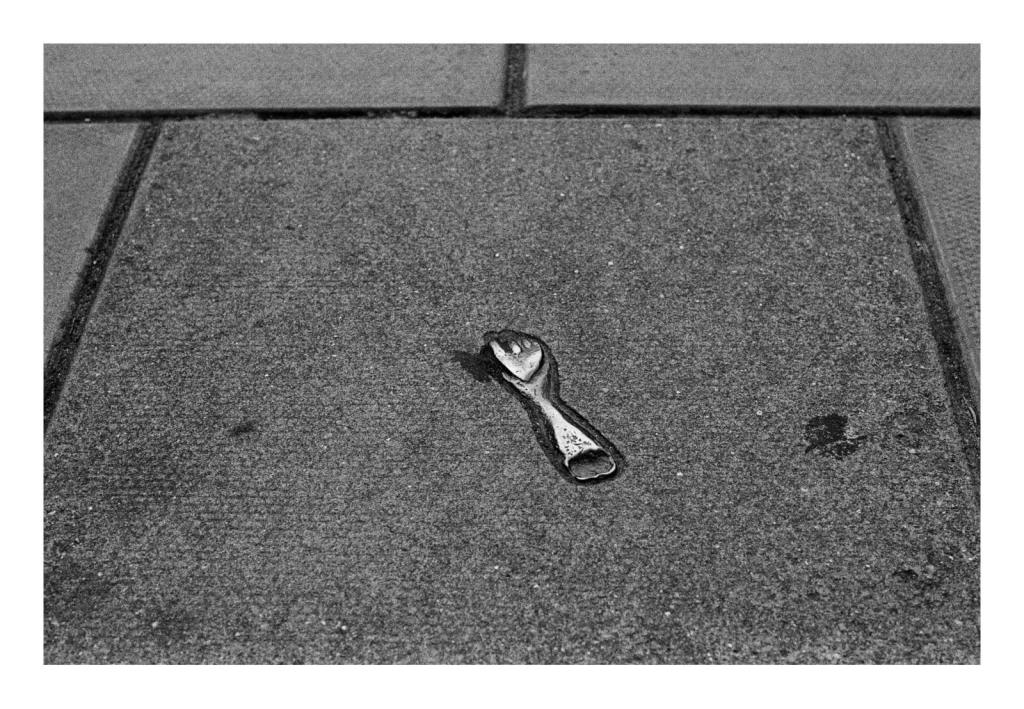
is crouching to look down at the fork
cemented into pavement, the shape
so definite we knew the story wouldn’t end well
before we looked. 1741 orphans, parcel-bound,
left at the first children charity in 1739,
the lucky white ball for a mother to hand in
a token, a fork, sure and permanent as a body
that leaves. We keep to the trail,
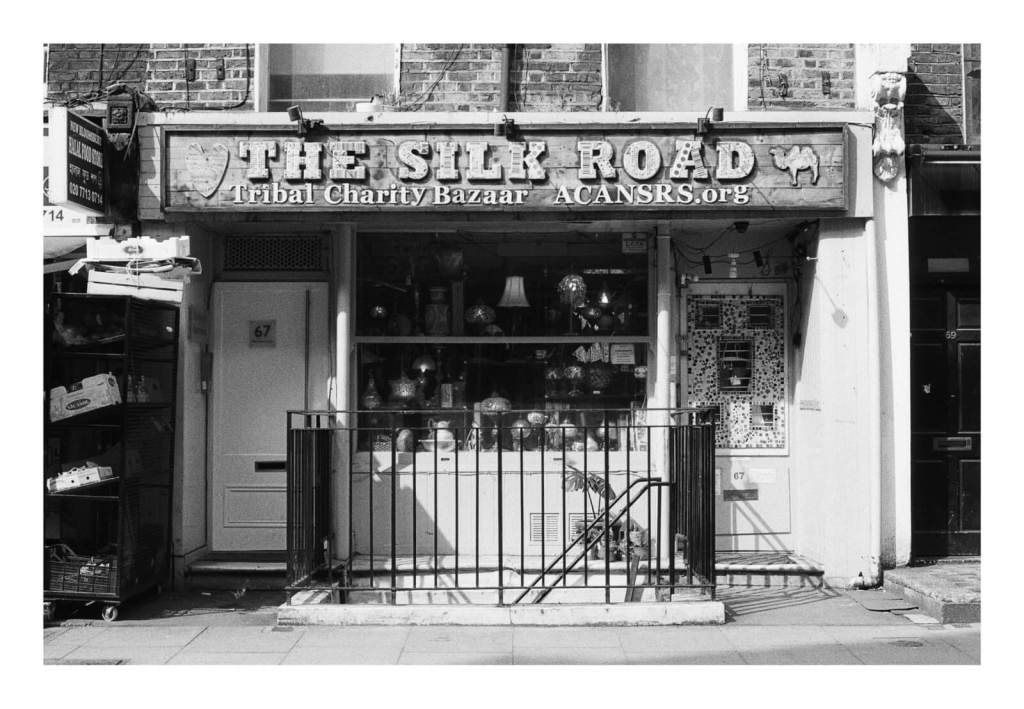
the sight of ‘The Silk Road’ charity shop
oozing onto the sleek cafes of Marchmont Street
ten steps away from our first place, where I come back,
year and year again, fear beckoning
to observe the trinkets, the loud patterns
pitching the bargains of the ‘Tribal Charity Bazaar’, a mother
crouching, hands asking for a return, clutching
remembrance like a token, where this is the best we get
absence inscribed, handed-down, the hesitation in one’s step
looking for familiar colours, the sign
that proves time wrong. Inside –
a shopkeeper greets us in past tense,
which is how we want to live, really,
furnished in decorative, deliberate
displays of what we know, carrying
the shape of a sitar, a piala bowl,
the threads of Persian carpets, their precise
mistakes like memory, the restless place between the lost
and the imagined,
and isn’t it imagination, in the end,
its grieving, that wants something cemented
after the wanting, keeps us tethered to the joy
of being no one’s, no where’s, home as a promise
better unfilled, un-ending, sent to the ground for others
to trace back


 Migrant Writing